Nuwekloof Pass
R46, between Wolseley and Tulbagh
The valley’s oldest doorway: one of only three wagon routes through the Cape mountain wall, worked since the 1700s and realigned by Thomas Bain in 1860.
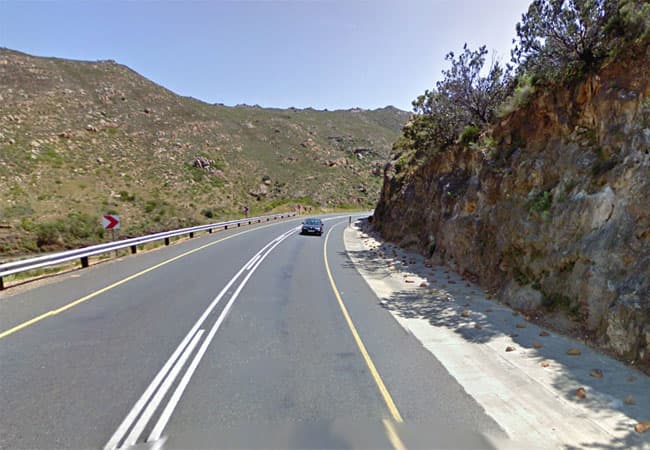
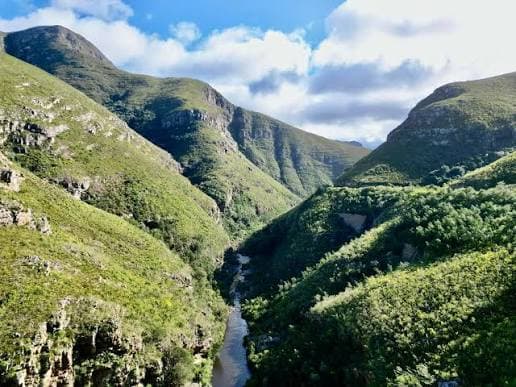
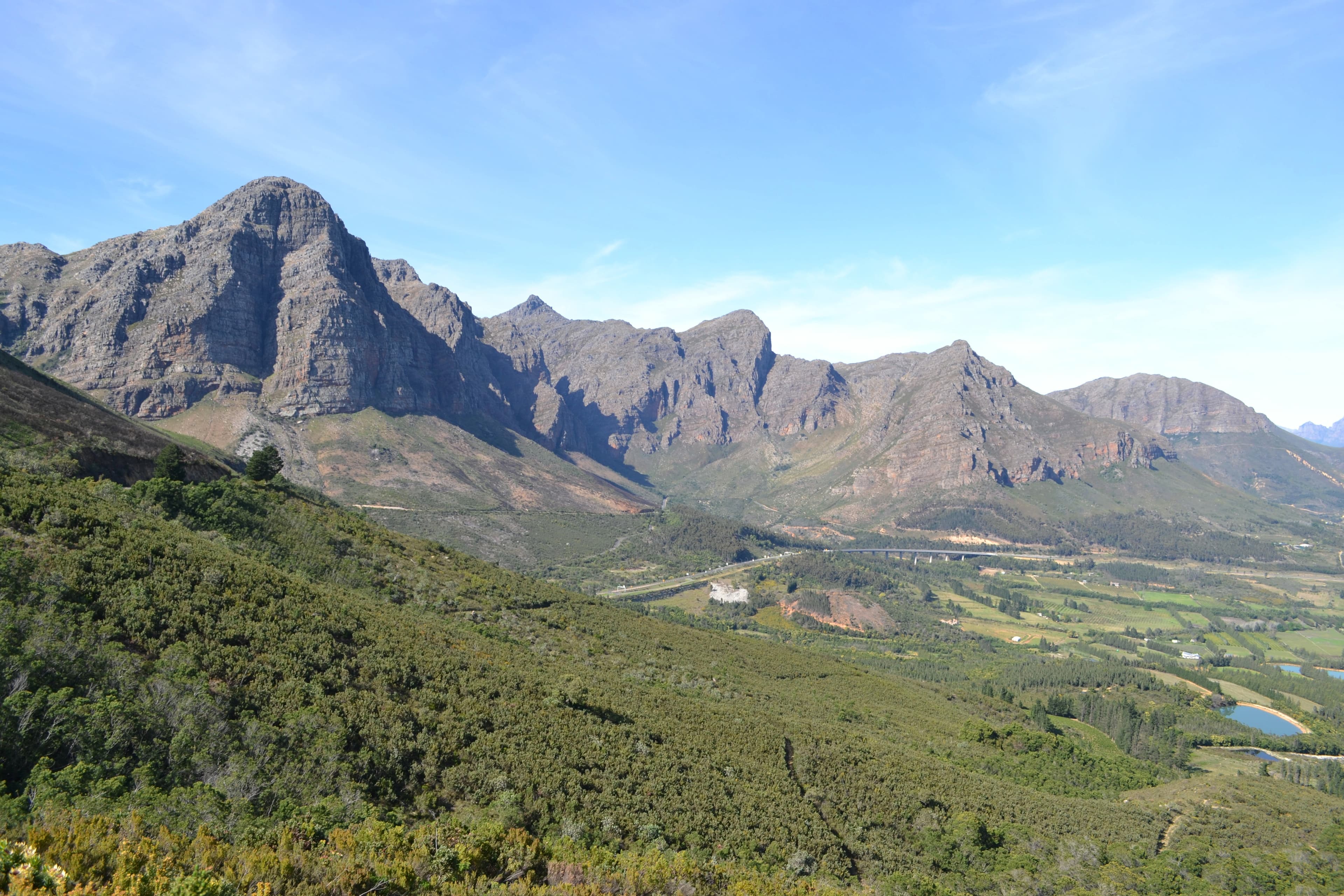
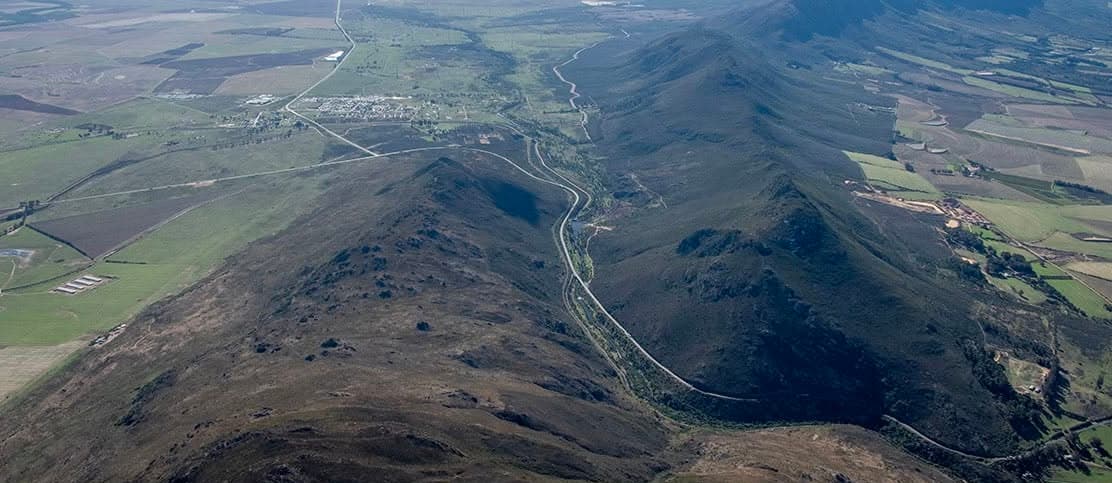
Long before engineered roads, the kloof the Klein Berg River cut through the Obiqua Mountains was one of only three places where ox-wagons could cross the mountain barrier that sealed Cape Town off from the interior: Gantouw in the south, Piekenierskloof far to the north, and the Roodezand Pass here in between. The first rough pass through this gap served the farms of the Land van Waveren (Tulbagh) from the early 1700s, and a tollgate was collecting fees by 1807: four shillings for a loaded wagon.
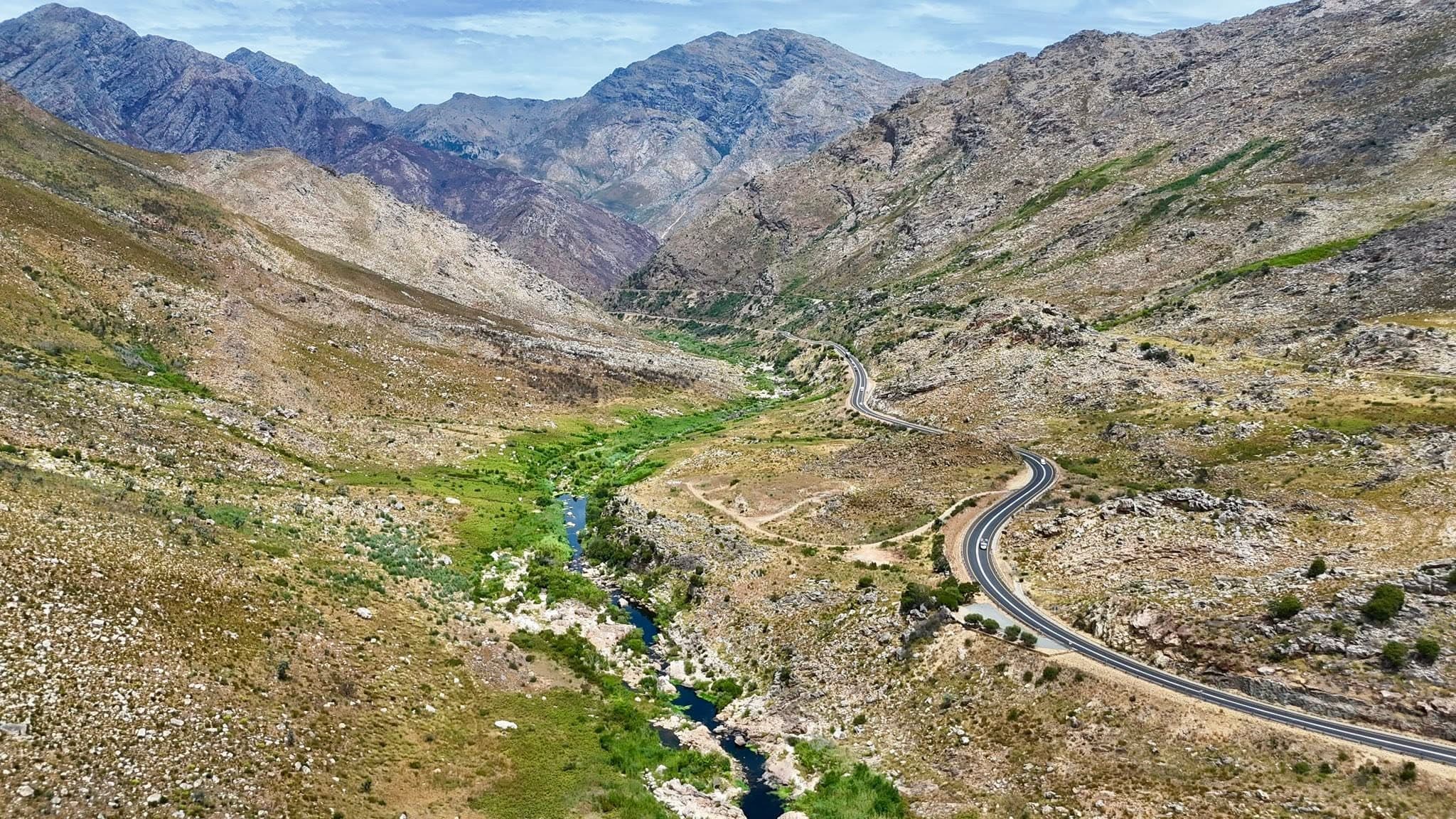
In 1855 Thomas Bain, son of Andrew Geddes Bain and the most prolific pass-builder South Africa has produced, surveyed a better line along the river's left bank. His realignment, built in 1859–60, carried the traffic for the next hundred years, and in 1873–75 the railway followed him through the kloof; Bain himself was seconded to the Railway Department to see the line built.
Today the R46 through Nuwekloof is the gentle, scenic way between Wolseley and the Tulbagh valley: a two-minute drive through 300 years of road history.